Tuesday, 21 July 2020

Know some features about alloy steels

Due to its high nickel content, Hastelloy C276 Tube is immune to stress corrosion cracking due to chlorides. The high molybdenum and chromium contents of the alloy allow it to withstand oxidizing, non-oxidizing and mixed-acid environments. It is done while presenting exceptional resistance to pitting corrosion and too cavernous corrosion. The addition of tungsten prevents the development of bites. Finally, Hastelloy C276 Pipe is suitable for offshore applications for which resistance to stress corrosion cracking due to hydrogen sulfide (H2S) is essential.


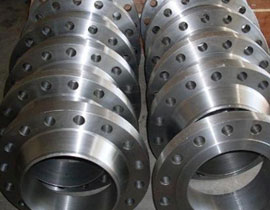
Several companies have adopted Hastelloy C276 Flanges for aggressive or corrosive environments where other alloys have proven ineffective.

Hastelloy C276 Round Bar is used in the chemical and petrochemical processing, power generation, pulp and paper, waste treatment and pharmaceutical industries, among others.

Key Features of Inconel 625

Good strength/ductility properties from sub-zero temperatures to over 980°C
Excellent corrosion and fatigue resistance in a wide variety of corrosive environments including seawater and industrial acids.

Inconel 625 Fittings are Non-magnetic and spark resistant.

Resistant to high-temperature oxidation and carburization.

Key Features of Alloy K500

High strength and hardness from sub-zero to elevated temperatures
Excellent corrosion resistance in a wide range of environments
Monel K500 Plate is resistant to chloride stress corrosion
Good resistance to impingement attack

Titanium and titanium alloys

Titanium is mainly used as a light and resistant alloy in:

  • the aeronautical industry in the form of pressed forgings, in screws and bolts and for the manufacture of engine parts.
  • the chemical industry in tabular forms
  • the medical sector (dental implants, prostheses, etc.)
  • The main characteristics of Hastelloy C276 Fittings are:
  • lightness (density 4.5)
  • ductility which facilitates installation
The corrosion resistance of Titanium Pipe is due to the oxidation of the surface which reproduces naturally in the case of a scratch, for example. In natural water, in seawater, underwater vapour, titanium is completely resistant even when the temperature rises. From 90 °, the oxide film thickens.
There are many titanium alloys, but the most used in the industry are TA6V which represents 50% of the market and T40.

  • The Titanium Round Bar is pure titanium with some additional elements. It is used in industry for its ductility-cold formability balance and its resistance. The ASTM standard designates this alloy under the name Grade 2. Re = 483MPa. A = 24%.
  • the Titanium Plate is titanium loaded 6% aluminium and 4% vanadium. Aluminium provides improved strength and lower ductility. Vanadium increases ductility. The ASTM standard designates this alloy under the name Grade 5. Re = 900MPa. A = 8%

The Titanium seamless tube has the same composition as a TA6V. Implantable and bio-compatible, it must meet medical standards ISO 5832-3 and Incoloy 825 tube. It is also known as ASTM B348 Grade 23. It is mainly used in the medical sector (surgical and dental implants), but it is found in the industry. Compared to a classic TA6V, 904l Plate has better resistance to cryogenics and shock.

There are many standards used for Hastelloy C276 Plate metal and must be specified by the buyer. They mainly define the alloy suited to the desired use:

Tuesday, 7 July 2020

What are Inconel Tube 625 and its different properties?

Alloy 625 is popular for its resistance to corrosion, outstanding strength. It is well-known due to varied properties:

  1. Addition of molybdenum and niobium gives unbeatable strength
  2. Ease for welding capabilities

Mechanical Properties of Inconel 625:

After we have seen the Chemical properties, we now look at the mechanical properties of Inconel 625 Tube. This is to know how the metal can be processed and used by engineers. The first test begins with stretch and shape. This is attributed to strength. The hardness is known as to how much deformation the metal can resist. Repeated stress that a metal can handle contributes to its fatigue strength. This depends on both the frequency and the duration of the stress that is being applied.

The endurance of Inconel 625 Pipe is measured at different temperatures.
1) 2000/2200°F: solution annealing and air quench/quicker,
2) 1600/1900°F: annealing and air quench/quicker, and
3) 1100/1500°F: stress relieving and air quenching


Ni 625 Cold Drawn Tube


Physical Properties of Inconel 625
  • Density: 0.303 lb/in3(8.44 g/cm3
  • Specific Gravity: 8.44
  • Alloy Inconel 600 Tube Melting Range: 2350 - 2460°F (1280 - 1350°C)
  • Specific Heat: 0.098 Btu/lb x °F (410 Joules/kg x °K)
  • Magnetic Permeability (75°F, 200 oersted): 1.0006

Types of Alloy 625 Tubes are:
* Exhaust Tubing
* Rectangular Tube
* Square Tube
* Round Tube
* Seamless Tube
* Furnace Tube
* Heat Exchanger Tube

Other Products of Inconel 625 are:
Some of the other products of Inconel 625 are:
* Bar
* Sheets
* Plates
* Fasteners
* Forgings
* Coils
* Welded components, and
* Welding products

The Choice for Markets:

Inconel 625 Pipe Fittings can resist to high temperatures as high as 1800-2000˚F. This feature makes it an excellent choice for chemical processing. Due to its resistance to oxidation, it is also suited for marine applications. This is also due to the Alloy 625’s resistance to corrosion in freshwater and/or saltwater. It is used extensively in equipment for Oceanography. It is also used in the nuclear industry and the aerospace industry extensively. It is primarily used for rod, and reactor cores. In the aerospace industry, Inconel 600 Pipe Fittings is used for exhaust systems and ducting systems.

Physical properties of stainless steel

1 the density of carbon steel is slightly higher than ferrite and marshal stainless steel, and slightly lower than austenitic stainless steel;
2. Increasing resistance by carbon steel, iron, marshalin and austenitic stainless steel in continuity;

General physical characteristics

Like other materials, physical properties mainly include the following three aspects:

  • Melting point, specific heat capacity, thermal conductivity and linear expansion capacity
  • Electrical resistance, conductivity, parliament and other electrical properties.
  • Hardness scope and other mechanical properties of flexibility.

These properties are generally the mineral properties of stainless steel, but are also affected by temperature, processing degree and magnetic field strength. In general, stainless steel has lower thermal conductivity and higher resistance than pure iron. The linear expansion capacity and magnetic conductivity varies according to the crystal.